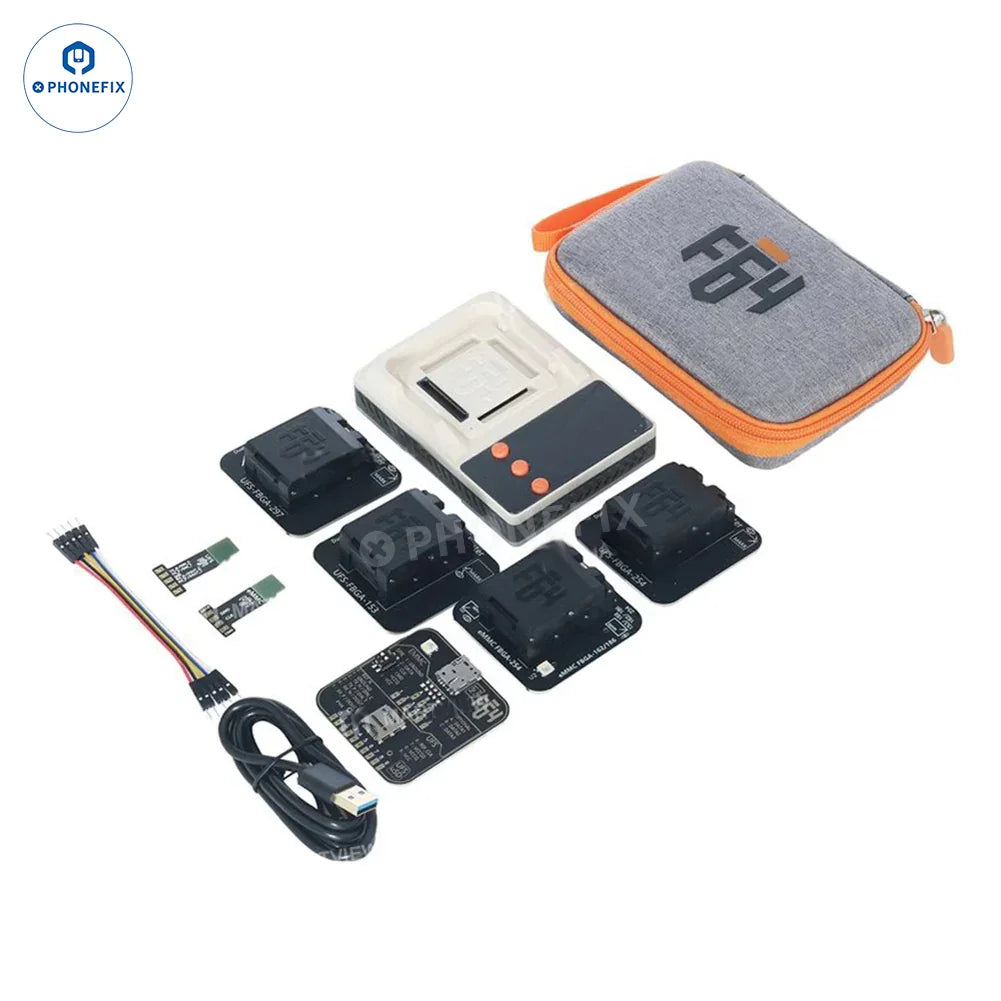

Smartphones are become more sophisticated as technology continues to progress. Modern smartphones provide previously unheard-of difficulties for repair technologies, from 5G technology to foldable screens and tiny, high-density electronic components. In 2026, the mobile repair tools market is going through a significant transition from manual repair techniques to proactive repair and automation systems powered by artificial intelligence. Phonefix will delve deeply into the important mobile repair tools of 2026, as well as changes in the smartphone repair market and future trends.
I. Background of Mobile Repair Tools Development
Over the past decade, the pace of smartphone upgrades has accelerated, and device structures have become increasingly complex. The application of foldable screens, ultra-thin motherboards, high-density chips, and multi-functional sensors has made traditional manual repair methods inefficient and prone to damaging components. Against this backdrop, phone repair tools and phonefix tools in 2026 will not only focus on device disassembly and assembly but also emphasize intelligent diagnostics, predictive maintenance, and micro-repair capabilities. Technicians can leverage mobile repair tools to complete complex repairs quickly, improving customer satisfaction and reducing operating costs.

II. Key Impacts on the Smartphone Repair Industry
1. Efficient and Fast Repair
Traditional repair relies on experience-based judgment and manual disassembly, which is time-consuming and prone to missing faults. Phone repair tools in 2026, such as PiceaOnline, Phonecheck, and FixBot, can analyze hardware and software faults within minutes, generating detailed reports and reducing repair time from hours to less than an hour.
2. Predictive Maintenance
AI tools can monitor indicators such as battery impedance and flash memory read/write errors, issuing alerts approximately 15 days before potential faults occur, enabling "proactive" maintenance and reducing unexpected failures and return rates.
3. Increased Demand for Precision Tools
With component miniaturization and the widespread adoption of foldable screens, high-magnification digital microscopes, micro-soldering kits, hot air guns, and BGA soldering stations are becoming standard equipment, allowing technicians to repair circuits at the microscopic level, avoiding the need to replace entire modules, saving costs and reducing electronic waste.
4. Sustainability
Phone repair kits and mobile repairing tools support non-destructive repair, replacing only faulty components. 3D printing custom parts such as housings and connectors reduces inventory costs and e-waste.
III. Key Repair Tools and Procedures in 2026
In practical repair work, technicians rely on phone repair tools, phonefix tools, and mobile repairing tools to perform each step. Below are typical repair procedures and tool usage examples:
1. Initial Inspection and Fault Diagnosis
· Tools: PiceaOnline, Phonecheck, FixBot;
· Operation: Technicians connect the phone to an AI diagnostic system. The system automatically reads logs, analyzes battery health, flash memory status, screen and sensor functionality, and generates a report.
· Purpose: Quickly identifies hardware and software faults, reducing human error.
2. Device Disassembly
· Tools: Screwdriver kit, plastic pry bar, suction cup, ESD anti-static gloves;
· Operation: Gently lift the glass screen along the edge using a suction cup or pry bar. Remove the screws with a screwdriver, taking care to protect the ribbon cable and camera module.
· Function: Safely disassemble the device, avoiding damage to the screen and motherboard.

3. Microscopic Component Repair
· Tools: Digital microscope, BGA soldering station, hot air gun, solder wire;
· Operation: Observe the micro-solder joints on the motherboard under a microscope, use a hot air gun to heat the faulty chip, and precisely solder it using micro solder wire.
· Function: Repair damaged circuits or chips without replacing the entire motherboard.
4. Battery or Screen Replacement
· Tools: Automated disassembly robotic arm, laser repair tool, 3D printed parts;
· Operation: The robotic arm precisely disassembles the aging battery or screen, the laser equipment removes back glass or screen fragments, and 3D printed custom brackets or connectors are used to ensure a proper fit when installing new components.
· Function: Improves replacement accuracy, reduces human-caused damage, and meets the special needs of foldable devices.
5. Post-Repair Inspection and Verification
· Tools: AI diagnostic software, test fixtures, multi-functional testing station;
· Operation: After repair, use AI tools to perform overall device testing, including touchscreen, camera, battery, flash memory, and sensor functions, to ensure the device is back to normal operation.
· Purpose: To ensure repair quality and reduce rework rates.
6. AR Remote Guidance
· Tools: 5G + AR Glasses;
· Operation: In complex repair scenarios, on-site technicians wear AR glasses, and remote experts provide guidance through augmented reality annotations.
· Purpose: To improve repair success rates, especially suitable for high-end or specialized equipment.

IV. Repair Tool Trends in 2026
1. Widespread Adoption of AI-Driven Diagnostics
Technicians will use mobile repair tools to automate the identification of hardware and software faults, significantly reducing misdiagnosis.
2. Augmented Reality Remote Repair
The combination of AR technology and 5G networks will enable experts to remotely guide on-site repairs, achieving cross-regional knowledge sharing.
3. Robotics and Automated Disassembly
Automated repair stations equipped with robotic arms will be widely used for battery, screen, and backplane replacements, ensuring safe and efficient operations.
4. High-Precision Micro-Welding Technology
As component sizes continue to shrink, BGA soldering, hot air rework station, and microscopic repair will become standard procedures.
5. Laser Precision Operation
Laser technology is used to disassemble and repair vulnerable components such as OLED screens and back glass, avoiding damage to surrounding components.
6. On-Demand 3D Printing Parts
Customized housings, connectors, brackets, and other parts can be printed on demand, reducing inventory costs and improving repair flexibility.
7. Digital Microscope Inspection of Water Damage
High-magnification microscopes can detect microscopic corrosion and micro-solder joint damage, making water damage repair more precise.
In 2026, the smartphone repair sector is at the forefront of innovation in technology. Repair procedures are being transformed by phonefix and mobile phone repair solutions like AI diagnostics, AR remote guiding, robotic disassembly, micro-welding, laser repair, and 3D printed parts. In the upcoming years, as tools and technology continue to advance, the repair industry will not only increase the longevity of equipment but also encourage the growth of independent repair shops, creating an ecosystem for mobile device repair that is more intelligent, effective, and environmentally friendly.