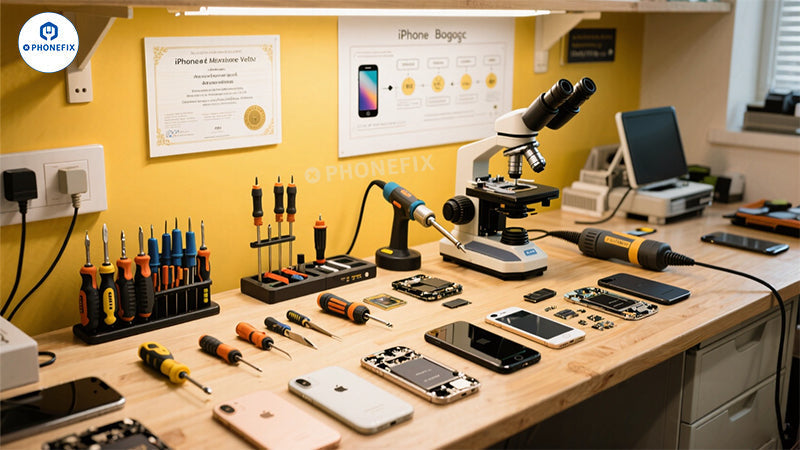
In today's digital era, mobile phones have seamlessly integrated into every facet of our lives, becoming an indispensable companion. This widespread adoption has spurred the remarkable growth of the mobile phone repair business, transforming it into a highly lucrative and rewarding career path. To thrive in this competitive landscape, it is essential to equip yourself with the right phone repair tools, stay abreast of industry trends, and continuously enhance your repair skills.

In this guide, The China Phonefix team will unveil a curated selection of the latest and most sought-after tools and equipment in the mobile phone repair market. Whether you're a novice embarking on your repair journey or a seasoned professional looking to expand your toolkit, this article is tailored to meet your needs. Given that phone screen issues are the most common complaints among mobile phone users, we will place a particular emphasis on the step-by-step process of screen repair, exploring the selection and application of tools from basic essentials to advanced professional-grade equipment.
Essential Tools and Repair Processes for Mobile Phone Repair
1. Fault Diagnosis: Pinpointing the Root Cause
The initial stage of any repair job is to accurately diagnose the problem. This requires a combination of basic hand tools and sophisticated diagnostic equipment to identify the root cause of the issue.

Basic Tools for Preliminary Inspection: A comprehensive set of YCS mini screwdrivers is the cornerstone of any mobile phone repair kit. With a variety of bit types, including Torx, Phillips, and Pentalobe, these screwdrivers enable you to safely and efficiently disassemble a wide range of mobile phone models. The YCS Power boot cable is a valuable addition to your toolkit, allowing you to quickly determine if the phone is experiencing power-related issues or a malfunctioning motherboard.
Advanced Diagnostic Equipment: The JCID IX4 flashing box is a powerful tool that enables you to perform system resets and firmware updates, effectively troubleshooting software-related problems. The JCID Bus Analyzer - RBOX1I is a state-of-the-art device that analyzes the internal communication buses of the phone, detecting any anomalies or faults in the data transmission. The QIANLI SuperCam 3D thermal imager camera provides a detailed thermal map of the phone, allowing you to identify overheating components and potential short circuits.
2. Disassembling the Phone: Minimizing Damage to Components
Once the fault has been identified, the next step is to carefully disassemble the phone without causing any damage to the internal components. This requires a delicate touch and the use of specialized tools.

Basic Tools for Precision Disassembly: Pry tools and opening picks made from anti-static materials are essential for safely removing the back cover and separating the internal components of the phone. The YCS precision tweezers are designed to handle small and delicate parts with ease, allowing you to remove dust particles, debris, or damaged components without causing any further damage.
Automated Disassembly Equipment: TBK 288 LCD screen removal equipment that streamlines the screen removal process, reducing the risk of damage and improving efficiency. This automated system uses advanced robotics and precision sensors to safely and accurately remove the LCD screen from the phone, making it an indispensable tool for professional repair technicians.
3. Cleaning and Inspection: Ensuring Optimal Performance
After disassembling the phone, it is important to clean and inspect each component to remove any dirt, dust, or debris that may have accumulated over time. This helps to ensure optimal performance and prevent future problems.
Basic Cleaning Tools: The YCS Electric grinding pen is a versatile tool that can be used to clean and polish small components, removing any burrs or rough edges. Compressed air cans are also useful for blowing away dust and debris from hard-to-reach areas.
Advanced Inspection Equipment: Ultrasonic cleaners use high-frequency sound waves to remove dirt and contaminants from the components, providing a thorough and gentle cleaning solution. The JCID M3750-A stereo microscope and the Qianli 6558X trinocular microscope offer high-resolution magnification, allowing you to inspect the components for any signs of damage or wear. The YCS X80 4K camera provides detailed images of the internal components, making it easier to identify any potential issues.

4. Repair and Replacement: Restoring Functionality
Once the components have been cleaned and inspected, any faulty or damaged parts can be repaired or replaced. This requires a high level of skill and the use of specialized equipment.
Soldering Equipment for Precision Repairs: The YCS soldering station and the AIXUN T420D dual-channel smart soldering station are equipped with advanced temperature control systems, allowing you to perform precise soldering operations on small and delicate components. The JCID T208 with soldering iron tip is a high-quality soldering iron that provides excellent heat transfer and control, making it ideal for fine soldering work.
Specialized Repair Tools: The YCS iPhone CPU tin - planting mesh set is specifically designed for repairing iPhone CPUs, ensuring a reliable and long-lasting connection. The AIXUN H310D heat gun is a powerful tool that can be used to heat and remove adhesive, making it easier to disassemble and reassemble the phone.
5. Assembly and Testing: Ensuring a Perfect Fit
After the repair and replacement process is complete, the phone needs to be carefully reassembled and tested to ensure that it is functioning properly. This requires attention to detail and the use of the right tools.

Assembly Tools: Adhesive strips and the QianLi UV Curing Fan are used to securely attach the screen and back cover of the phone, ensuring a tight and durable fit. The YCS-H03 ring clamp is a useful tool for holding the motherboard in place during the assembly process, making it easier to connect the components.
Testing Equipment: The TBK208M 3 in 1 vacuum separating, laminating, and bubble - removing machine is used to ensure a perfect fit between the screen and the phone body, eliminating any air bubbles or gaps. The TBK 938M screen grinding and polishing machine is used to smooth and polish the screen, removing any scratches or imperfections. The TBK 209 screen pressing machine applies even pressure to the screen, ensuring a uniform and secure fit. The JCID BC02 -T battery cycler is used to test the performance of the battery, ensuring that it is functioning properly and providing a long-lasting charge.
6. Quality Assurance: Ensuring Customer Satisfaction
Once the phone has been assembled and tested, it is important to perform a final quality check to ensure that it meets the highest standards of quality and performance. This includes testing all the functions of the phone, checking for any cosmetic defects, and ensuring that the phone is fully functional.
Performance Testing Equipment: The JCID iBooter Mac Current Analyzer is used to analyze the power consumption of the phone, ensuring that it is operating efficiently and not consuming too much power. The QianLi iBridge A3 Lightning Type-C tail plug analysis tester is used to test the charging and data transfer capabilities of the phone, ensuring that it is working properly.
Environmental Protection Equipment: The AIXUN ES02 fume extractor is used to remove any harmful fumes and gases generated during the soldering process, protecting the health of the repair technician and ensuring a safe working environment.
7. Supplier Relationships: Ensuring a Steady Supply of Quality Parts
To ensure the success of your mobile phone repair business, it is important to establish strong relationships with reliable suppliers. This includes sourcing high-quality phone replacement parts, such as screens, batteries, and motherboards, as well as other phone accessories, such as phone screen protectors and cases.

Selecting Reliable Suppliers: When choosing suppliers, it is important to consider factors such as quality, price, reliability, and customer service. Look for suppliers who offer a wide range of products, have a good reputation in the industry, and are willing to work with you to meet your specific needs.
Maintaining Good Relationships: Once you have established relationships with your suppliers, it is important to maintain good communication and cooperation. This includes placing orders in a timely manner, paying your bills on time, and providing feedback on the quality of the products and services.
Conclusion
Mobile phone repair is a complex and challenging field that requires a combination of technical skills, knowledge, and experience. By equipping yourself with the right phone repair tools, staying abreast of industry trends, and continuously learning and improving your phone repair skills, you can become a successful mobile phone repair technician and provide high quality repair services to your customers. Whether you're a beginner or a seasoned professional, this guide provides valuable insights and practical tips to help you master the art of mobile phone repair.