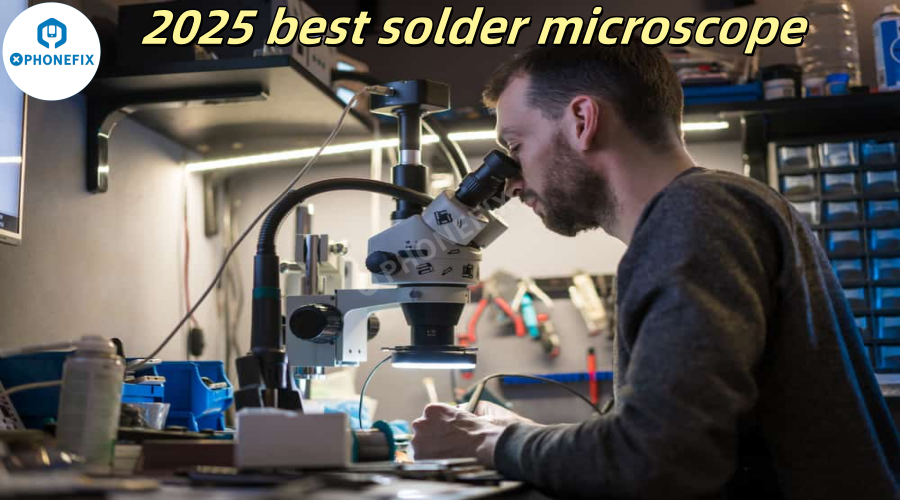
Soldering is an essential skill for electronics repair and rework, and having the right tools can make all the difference. One of the most critical tools for precise soldering is a soldering microscope. In this guide, Phonefix will explore the key factors to consider when choosing a soldering microscope, helping you gain a clearer understanding of how to select the right microscope for your needs.

What is a Soldering Microscope?
A soldering microscope is a specialized tool designed to magnify objects to make intricate soldering tasks more manageable. As electronic components continue to shrink in size, using a microscope to perform detailed work like soldering becomes increasingly important. It allows you to see the fine details of circuit boards, ensuring that each solder joint is clean, accurate, and free from defects.
While desk magnifiers can provide some assistance, they’re generally limited in terms of magnification and ergonomics. For serious soldering tasks, a stereo microscope or a digital microscope is a better choice.
What Type of Microscope is Best for Soldering?
There are three main types of microscopes you might consider for soldering tasks:
-
Desk Magnifier
A simple, low-cost option for those who don’t need high magnification. However, they lack the ability to provide detailed views of small components and offer limited working distance.
-
YCS Trinocular stereo microscope
Stereo microscopes offer 3D imaging, allowing you to view the depth of objects, which is ideal for tasks like soldering. They typically provide 10x to 40x magnification, which is sufficient for most electronics work. The downside is that you need to look through an eyepiece, which can be uncomfortable for extended use.
-
Digital Microscope
These microscopes display the magnified image on a screen rather than through an eyepiece, which can significantly reduce neck and eye strain. Many digital models also offer additional features, such as image capturing, auto-focus, and software integration, making them ideal for both soldering and documentation.
Key Factors to Consider When Choosing a Soldering Microscope
When selecting a soldering microscope, there are several features to keep in mind to ensure it meets your needs:
1. Magnification Range
Magnification allows you to see the fine details of small components. For general soldering work, a magnification range of 10x to 40x is often sufficient. However, if you’re working with very tiny components or performing tasks like PCB inspection, you might need higher magnification (up to 100x or more).
-
Stereo microscopes typically offer a lower magnification range (10x to 40x), but their 3D viewing is ideal for soldering.
-
Digital microscopes can offer variable magnification, and some models come with the ability to zoom in on specific areas, providing more flexibility.

2. Lighting
Proper lighting is crucial for clear, sharp images. Look for microscopes that provide adjustable YCS Microscope LED lighting, which allows you to control the intensity and direction of the light for optimal visibility. Ring lights are also a great feature to reduce shadows and provide uniform illumination.
-
Shadow-free lighting is key for reducing glare and making the work area visible from all angles.
-
Ensure that the microscope has adjustable brightness to accommodate different working conditions.
3. Working Distance and Ergonomics
A comfortable working distance is essential, as it allows you to maneuver tools and components without feeling cramped. Most soldering microscopes have a working distance of around 100-150mm, but it may vary depending on the model and magnification.
-
Ergonomics: If you’re planning on using the microscope for long sessions, opt for a digital microscope that allows you to view the work on a monitor, thus preventing neck and back strain from looking down into eyepieces.

4. Image Capture and Documentation
If you need to capture images or videos of your work for documentation or analysis, a digital microscope is the way to go. Many models come with built-in cameras that allow you to easily take snapshots or record videos.
-
Look for microscopes with USB connectivity, so you can easily transfer images to a computer for further analysis or storage.
-
Software compatibility is also an important factor to consider, especially if you need to annotate or measure images.

5. Durability
Durability is key if you plan to use the microscope frequently. Look for models made from sturdy materials, especially in the stand and base, as these are prone to wear and tear. A stable stand is critical to avoid vibrations that could distort the image.
Other important features
1. Frame Rate and Auto Focus
For digital microscopes, ensure the microscopes camera offers a high frame rate (at least 60 fps) for smooth viewing. Auto-focus is also beneficial, as it keeps the image clear and in focus as you move the PCB around.
2. Price and Value
Soldering microscopes can vary greatly in price, depending on the features. Budget models may lack advanced microscopes cameras or adjustable microscope lamps, but they can be sufficient for basic tasks. Investing in a higher-quality model with digital capabilities, better optics, and useful microscopes accessories will enhance your soldering experience.
Conclusion
Choosing the right welding microscope can not only improve welding accuracy, but also enhance work efficiency and comfort. As electronic components become smaller and smaller, accurate vision and operation become particularly important. Especially for jobs that frequently require repairs and rework, a suitable microscope, along with the right microscope accessories, can reduce neck and eye strain while improving work comfort and overall efficiency. China Phonefix provides high-quality microscopes and a range of essential microscope accessories that are particularly suitable for the field of mobile phone repair and electronic welding, offering clear images and powerful functional support.