
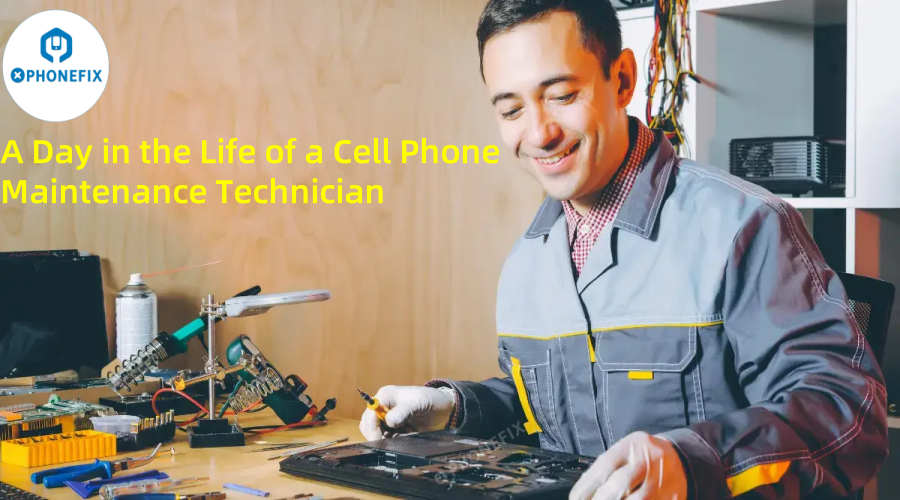
In the mobile phone repair industry, each day is filled with both challenges and a sense of accomplishment. A phone repair technician not only needs strong hardware and software skills but must also be proficient with a range of specialized tools. Here's a look at a typical day in the life of a mobile phone repair technician, highlighting the tools they use and the tasks they perform.
Preparation and Planning
The technician reviews the repair jobs lined up for the day, ensuring all necessary tools are ready. Different types of repairs require specific tools. For instance, if there's a cracked screen to fix, the technician will prepare Phone screen repair tools like suction cups, plastic pry tools, and precision screwdrivers. Ensuring the right tools are in place is key to starting the day off smoothly.

Customer Interaction and Diagnostics
As customers begin to arrive, the technician greets them and listens carefully to their issues. The goal here is to diagnose the problem accurately, whether it's a cracked screen, battery issues, or software glitches. To assist with this process, several diagnostic tools are employed:
- Hot Air Gun: Used to soften the adhesive holding the screen or back cover, making it easier to remove without damaging internal components.
- Digital Multimeter: Helps measure battery voltage and current, checking if the battery is functioning properly.
- Diagnostic Software: Installed on a computer, this software can be used to analyze system-level issues like software crashes, viruses, or performance problems.
These tools allow the technician to quickly and efficiently identify whether the problem is hardware or software related.
Hardware Repairs and Software Maintenance
Once the diagnosis is complete, the technician moves on to the repair process. Depending on the issue, different tools will be used to carry out the repair.
Phone Screen Replacement
When replacing a cracked screen, the technician first uses a suction cup tool to lift the screen away from the device, ensuring no internal parts are damaged. They also use plastic pry tools and precision screwdrivers to safely detach the screen and other components. To remove the old screen, a hot air gun is often used to soften the glue, making it easier to separate the screen from the frame.

Phone Battery Replacement
For a battery replacement, the technician typically uses precision screwdrivers to remove the phone’s outer casing. The battery is then carefully lifted using an absorption tool or suction cup, ensuring that no damage occurs to the motherboard or other sensitive components. After installing the new battery, the technician might use a battery tester to ensure the new battery is charging and discharging properly.

Software Fixes
For software repairs, tools like flashing software are used to reinstall the operating system or update the phone’s firmware. If the phone is locked, the technician may use Phone unlocking tools to bypass security features. In some cases, for more in-depth repairs, a JTAG debugging tool can be used to diagnose deeper hardware issues that may prevent the phone from booting up.
Customer Service and Repair Updates
As the day progresses, the technician deals with more customer interactions, explaining the progress of repairs, estimated costs, and any necessary additional work. Clear communication and great customer service are crucial during this phase. Along with the repairs, the technician uses repair tracking software to document every detail of the repair, including customer information, parts used, and repair outcomes.
After each repair, a quality control check is performed using tools such as:
- Phone Screen Tester: Ensures the screen is responsive and free from dead zones.
- Headphone/Volume Tester: Confirms the audio functions correctly.
- Camera Focus Tester: Verifies that the phone’s camera lens and autofocus are working as expected.
Final Checks and Documentation
As the day comes to a close, the technician performs a final round of testing on all devices that have been repaired. Every device undergoes thorough checks using functionality test tools, ensuring that all features — such as the touchscreen, charging port, and camera — work perfectly.
After completing repairs, the technician updates the repair logs with details of the services provided, including parts replaced, hours worked, and any issues encountered during the repair. These logs are important for future troubleshooting and customer support.
Continuous Learning and Keeping Up with Technology
Although the day’s work is winding down, the mobile repair industry is constantly evolving. To stay ahead, technicians often spend their free time learning about new Phone repair tools, phone models, and software updates. This could mean attending workshops, reading up on new repair techniques, or familiarizing themselves with emerging technologies such as foldable phones. Staying updated is essential, as newer models and more complex devices require different tools and techniques.

Summary
A mobile phone repair technician's day is filled with precision, meticulousness, and focus. Armed with a range of specialized tools, such as hot air guns, screwdrivers, suction cup tools, and multimeters, these technicians efficiently and accurately complete a wide range of mobile phone repair tasks. As technology continues to advance, repair technicians must constantly hone their skills, mastering the latest tools and techniques to handle increasingly complex repair needs.


