
In the mobile phone repair industry, having the "right tools" not only makes the job easier but also serves as the stepping stone for advancing from a novice to a professional. Phonefix provides a detailed breakdown of the tools required—ranging from basic disassembly to chip-level repair—along with estimated costs (in USD) and recommendations regarding which tools are best suited for specific user groups.
I. Strategic Comparison: DIY vs. Professional Repair
Before investing, you must decide your goal: Are you fixing a single device or building a career?
1. DIY Repair
· Applicable Scenarios: Battery replacement, cracked outer glass (where the display remains functional), speaker cleaning.
· Tool Requirements: A basic manual tool kit (approx. $30–$60).
· Advantages: Exceptional cost-effectiveness. Taking the iPhone 17 as an example: an official battery replacement from Apple might cost $99, whereas purchasing a high-quality replacement battery and a tool kit yourself costs only about $35–$45.
· Risks: You bear 100% of the risk for operational errors. Modern smartphones utilize powerful adhesives extensively; non-professionals can easily puncture the battery or sever the Face ID flex cable during the disassembly process, potentially doubling the overall repair cost.

2. Professional Repair Services
· Applicable Scenarios: Motherboard short circuits, water damage (device won't power on), storage capacity upgrades, internal screen damage.
· Tool Requirements: Chip-level micro-soldering equipment, diagnostic power supplies, microscopes (total investment: $1,500+).
· Advantages: Warranty coverage and technical depth. Professional technicians operate within an Electrostatic Discharge (ESD)-controlled workshop environment and are equipped to handle faults invisible to the naked eye—such as microscopic cracks in the circuit board caused by drops.
· Core Value: It is not merely about fixing the device, but—more importantly—about data preservation.
II. Core Foundation Tools
If you plan to perform basic maintenance tasks, these constitute your absolute minimum required setup.
| Tool Name | Primary Use | Est. Price (USD) | Essential? |
| Precision Screwdriver Set | Opening iPhone (Pentalobe) & Android screws | $15 – $60 | Yes |
| Anti-Static Spudgers/Pry Tools | Safely separating housings and connectors | $2 – $10 | Yes |
| Heavy-Duty Suction Cup | Lifting displays on water-resistant models | $3 – $15 | Yes |
| ESD-Safe Tweezers | Handling micro-screws and delicate flex cables | $5 – $20 | Yes |
| B-7000 / T-7000 Adhesive | Professional-grade glue for screen/back glass | $3 – $8 | Consumable |
· Target Audience: Complete beginners with zero prior experience; digital DIY enthusiasts.
· Key Buying Principle: Quality over quantity. A single high-precision Pentalobe screwdriver can be your absolute lifesaver in a tight spot.
III. Diagnostic and Measurement Tools
When your work involves diagnosing faults such as "device won't power on" or "won't charge," diagnostic equipment is indispensable.
1. Digital Multimeter ($20 – $80): Used to check voltage and circuit continuity. Auto-ranging models are recommended to prevent inexperienced users from damaging the device.
2. Regulated DC Power Supply ($50 – $150): Used to "conclusively diagnose" whether a mobile phone has a short circuit or a system boot anomaly by observing the amperage readings.
3. Isopropyl Alcohol (IPA) ($5 – $15): An essential tool for cleaning motherboards and removing adhesive residue.
4. Magnetic Screw Memory Mat ($10 – $25): Organizes hundreds of screws in a systematic layout, preventing the common error of mixing up screw lengths—which can lead to piercing and damaging the motherboard.
· Target Audience: Intern technicians, electronics enthusiasts.
· Purchasing Priority: Focus on measurement accuracy.

IV. Soldering and Micro-soldering Tools
These tools are used for Level 3 repairs, such as soldering charging ports, transferring battery protection boards, and repairing IC chips.
1. Constant-Temperature Soldering Station ($40 – $300): Must feature precise temperature control to prevent overheating and damaging the solder pads.
2. Hot Air Rework Station ($60 – $450): Devices such as the Quick 861DW rework station, used for safely removing IC chips.
3. Trinocular Microscope ($200 – $600): The "eyes" of micro-soldering, providing high-definition magnification to observe intricate circuit board details.
4. Flux and Solder Paste ($10 – $30): Enhances soldering success rates.
· Target Audience: Independent repair shop owners, senior technicians.
· Core Strategy: Prioritize efficiency and yield rates to minimize rework costs.
V. Screen Refurbishment and Specialized Tools
Designed for advanced procedures such as replacing curved-screen glass covers, CPU board transfers, and memory capacity upgrades.
1. LCD Separator Machine ($30 – $120): Uses constant heat to safely separate shattered glass from the display panel.
2. OCA Laminating & Bubble Removal Machine ($800 – $2,000): The core equipment for professional screen refurbishment.
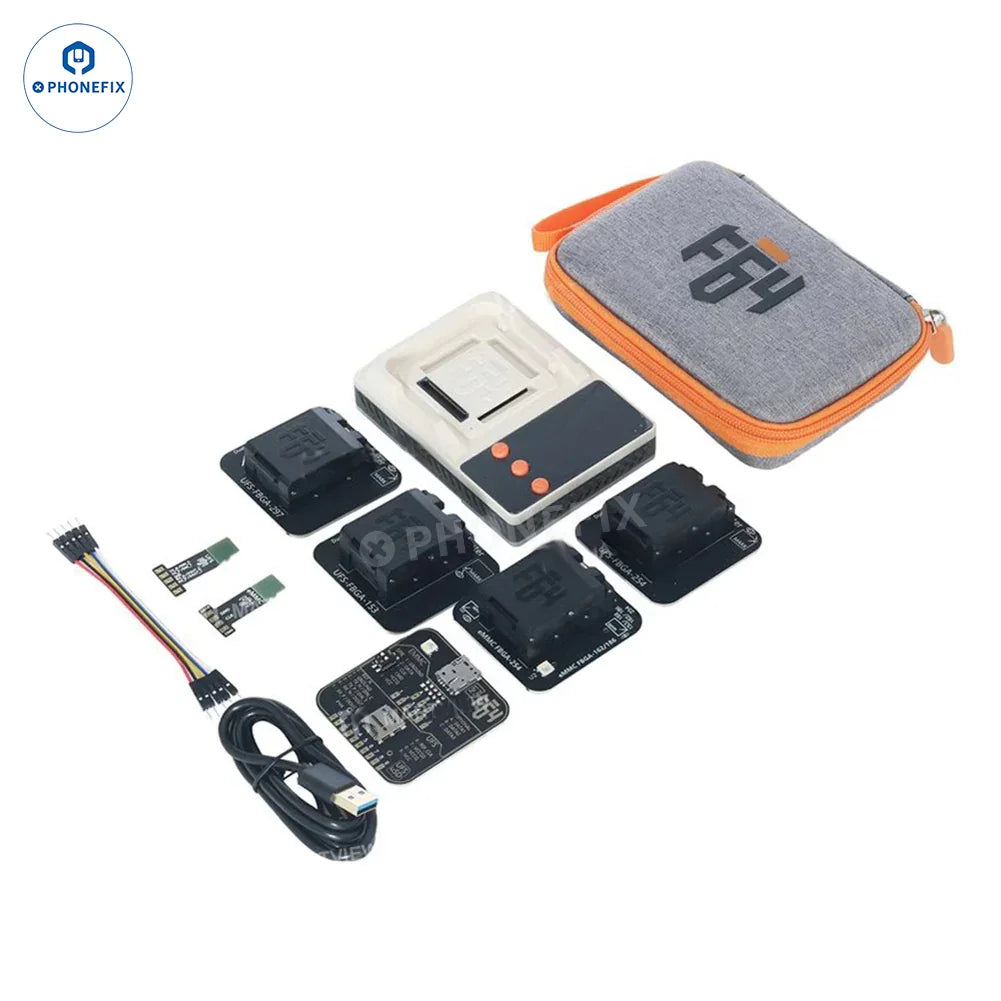
3. Hard Drive Programmer ($100 – $300): Used for repairing True Tone displays and Face ID, or for modifying battery data.
VI. 2026 Total Investment Budget for Mobile Phone Repair
| Repair Level | Budget Range | Capability |
| Basic DIY | $50 – $150 | Screen/Battery swaps, simple assembly |
| Standard Shop | $300 – $800 | Full diagnostics, port soldering, part repair |
| Master Technician | $1,500 – $3,500+ |
Chip-level repair, screen refurbishment |
VII. Professional Tips for Avoiding Pitfalls and Repair Advice
· Anti-Static (ESD) Awareness: A $20 anti-static mat can protect a $1,000 motherboard.
· "Snowball" Purchasing Strategy: Start by buying basic tools to get your business running; only invest in expensive equipment—such as microscopes or laminating machines—once you have generated a profit.
· Quality First: The money saved by purchasing cheap tools is often lost later through damage caused to customers' components.
As mobile phone technology continues to evolve, repair tools are also undergoing constant upgrades. It is highly recommended that you stay informed about the latest tool updates. By selecting professional phone repair toolkits and flexibly tailoring your equipment setup to your specific needs, you can ensure that these "sharp instruments" truly become invaluable assistants on your repair journey—enabling you to resolve faults efficiently while simultaneously minimizing both time and financial costs.