
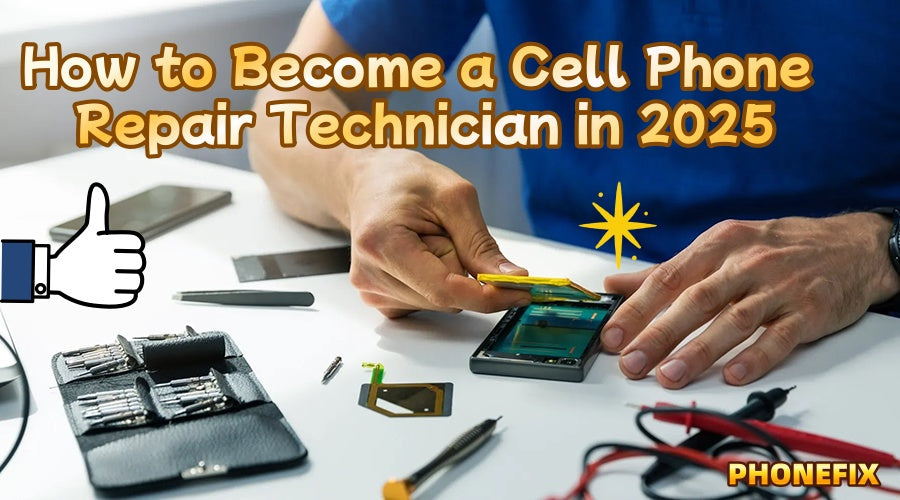
In today's world where smartphones have become an extension of our lives, the mobile phone repair industry remains as vibrant as ever. If you are interested in becoming a phone repair technician, 2025 is the best time to enter the field. Phonefix provides you with a clear and practical guide to help you understand the responsibilities of a phone repair technician, essential skills, common tools, and how to start your own repair business.

I. Technician Responsibilities
A qualified mobile phone repair technician needs comprehensive technical knowledge and good service awareness. The core responsibilities include:
1. Device Diagnosis and Troubleshooting
Identifying device issues is the first step in repair, including faults like cracked screens and boot issues. Using tools like the Phone Screen Tester helps assess touchscreen responsiveness, enabling faster, more accurate diagnoses.
2. Parts Repair and Replacement
Daily tasks often involve replacing components such as screen assemblies (including LCD and touch glass), batteries, camera modules, and charging ports.
3. Software and System Repairs
Software issues are also a vital part of the job. This includes flashing firmware, system unlocking, factory resets, and data backup and recovery services.

II. Essential Repair Skills
Next, we will start from the most basic electronic knowledge and gradually explore the skills needed to become a competent repair technician.
1. Basic Electronics Knowledge
Understanding basic circuit principles and components like capacitors, resistors, and ICs is essential for fault diagnosis and micro-soldering. A Digital Multimeter is often used to measure voltage and diagnose component issues.
2. Phone Structure and Components
Familiarity with the internal structure and layout of popular brands like iPhone, Samsung, Xiaomi, OPPO, and Vivo makes disassembly and reassembly more efficient.
3. Precision Operation Skills
Being proficient with various repair tools for delicate tasks such as replacing camera modules or repairing motherboard jumpers is a hallmark of an advanced technician.
4. Software Tool Operation Skills
Mastering flashing software, unlocking tools, and data recovery tools is key to enhancing your service capabilities.

III. Essential Phone Repair Tools
Here are some commonly used types of tools that technicians should become familiar with and learn to use skillfully:
1. Electric Tools
These include electric screwdrivers, DC power supplies, USB testers, and thermal Camera. They're used to speed up disassembly, test power, and locate faults like short circuits.
2. Phone Repair Tools
This covers phone programmers, Face ID repair tools, unlocking tools, and screen repair machines. They help with software repairs, Face ID fixes, and screen maintenance.
3. Micro-Soldering Tools
Tools like BGA Soldering Stations, soldering irons, nozzles, and flux are used for precise motherboard-level repairs and chip replacements.

4. Phone Parts and Accessories
This includes iPhone Components, Android IC chips, replacement screens, and other mobile phone accessories. Having a stock of key parts ensures technicians can quickly replace damaged components during repairs.
5. Manual Tools
Screwdrivers, tweezers, opening tools, suction cups, clamps, and anti-static mats are basic tools for safe disassembly and handling.
IV. Training Options
1. Enroll in Formal Courses
Choose related university programs to systematically learn circuit theory, repair techniques, and micro-soldering technology.
2. Online Self-Learning Resources
If your budget is limited, consider these platforms:
· YouTube: Many experienced technicians share practical videos.
· Udemy: Paid courses with high-quality content, suitable for advanced learning.

V. Starting Your Phone Repair Business
There are several practical ways to launch your phone repair career, depending on your resources and goals.
1. Home-Based Startup
Initially, start small at home, take orders, and build a reputation. Promote your services through WeChat moments, TikTok, community groups, and other platforms.
2. Opening a Physical Store
When your funds and experience are sufficient, open a repair shop in your community or a busy area to enhance your professional image.
3. Mobile Repair Service
Provide on-site repairs, especially suitable for office buildings and upscale residential areas, offering excellent customer experience and profit potential.

Conclusion
Experienced phone repair technicians'income varies by location and skill. Mastering motherboard repairs and system unlocking can boost your earnings. This growing industry will continue to demand skilled technicians. Success requires learning, practice, and improving tool use and customer service. If you are looking for quality mobile phone repair tools or want to learn about the latest repair technologies and industry trends, feel free to consult China Phonefix.


