
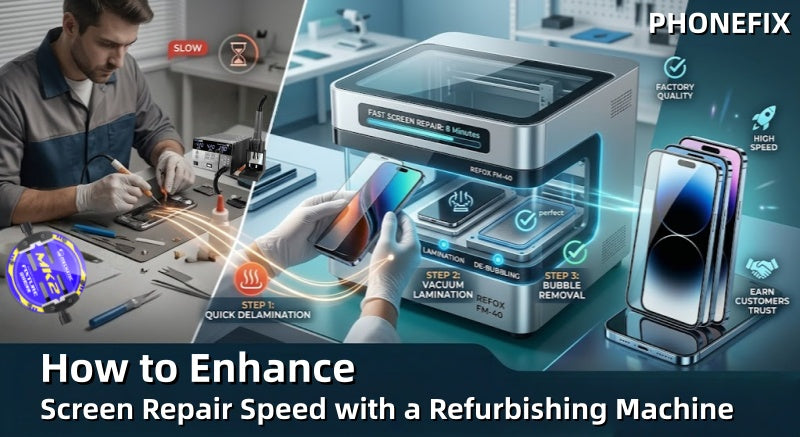
In today’s era of widespread smartphone use, screen damage is one of the most common repair needs. As screen technology has evolved from traditional LCDs to flexible OLEDs, the complexity of repairs has increased accordingly. Phonefix will delve into how to optimize the screen refurbishment process by using advanced LCD & OLED laminating machines, and provide you with a practical laminating machine guide.
I. Understanding Key Features of Refurbishment Machines
To significantly boost repair speed, you first need a high-efficiency, all-in-one device. For example, the REFOX FM-30/FM40 desktop laminating machine—which combines lamination, separation, and de-bubbling functions—is the cornerstone of modern repair workshops.
· Vacuum Laminating System: An automated vacuum environment ensures all air is expelled between the glass cover and the display panel during lamination.
· Precise Temperature Control: Whether removing old glass or bonding a new cover, consistent temperature control prevents overheating and damage to expensive OLED panels.
· Bubble Removal: A built-in high-pressure bubble removal chamber eliminates microscopic air bubbles in a short time, ensuring the screen delivers factory-level visual quality.

II. Pre-Repair Preparation
Efficient repairs don’t begin when you press the power button—they start with meticulous preparation.
· Complete Tool Set: Ensure you have a full set of phone repair tool kits, including professional pry tools, anti-static tweezers, and high-purity cleaning agents.
· Cleanroom Environment: Dust is the enemy of lamination. Working in a dust-free workshop or using a dust-free workbench prevents rework caused by improper dust removal, thereby indirectly improving repair speed.
· Quality of Replacement Parts: Choosing high-quality phone screen replacement parts reduces debugging time caused by incompatible components.
III. Optimizing the Bonding and Delamination Process
Mastering the core steps outlined in the bonding machine guide is crucial for achieving rapid refurbishment:
1. Efficient Delamination: Utilize the heating platform of the refurbishment machine, setting the temperature to 80°C–90°C. Use diamond wire to quickly cut through the adhesive layer. Skilled operation combined with stable machine heat output can reduce delamination time to just a few minutes.
2. Rapid Adhesive Removal: After delamination, use a dedicated adhesive remover in conjunction with a mechanical adhesive removal motor to achieve over three times the efficiency of manual cleaning.
3. Vacuum Lamination: Place the cleaned LCD/OLED panel and the new cover glass into the LCD & OLED lamination machine. Modern equipment (such as the REFOX FM series) typically features preset modes that automatically adjust pressure and vacuum with a single button press, eliminating the hassle of manual parameter adjustments.
IV. Dual Improvements in Efficiency and Quality Through Automation
The greatest advantage of screen refurbishment technology lies in its “consistency.”
· Reduced Human Error: Manual lamination is highly prone to uneven pressure distribution or misalignment. Automated lamination machines apply uniform pressure, ensuring that the screen’s touch sensitivity remains unaffected.
· Batch Processing: Skilled technicians can utilize the machine’s cycle time to simultaneously disassemble or clean multiple devices, enabling assembly-line operations.
· Wide Adaptability: Whether dealing with tablets, curved screens, or flat screens, multifunctional refurbishment equipment can quickly switch between tasks by changing molds, significantly expanding the scope of business operations.

V. Equipment Maintenance: Ensuring Long-Term Efficient Operation
To ensure repair speeds are not interrupted by equipment failures, regular maintenance is essential:
· Check the Vacuum Pump: Regularly inspect and replace vacuum pump oil to ensure efficient vacuum extraction.
· Clean the pressure pads: Residual adhesive on the silicone pads in the lamination chamber can cause uneven pressure distribution, leading to trapped air bubbles.
· Sensor calibration: Periodically check the accuracy of the pressure and temperature sensors.
In the highly competitive repair market, screen refurbishment is key to boosting profits. By introducing high-performance LCD and OLED lamination machines and following standardized processes, you can not only drastically reduce turnaround times but also ensure that screens meet factory-grade quality standards. A craftsman who wants to do his job well must first sharpen his tools. Choosing professional toolkits of phone repair and high-performance refurbishment equipment is the ultimate way to rise from mediocrity to excellence and earn your customers’ trust.


