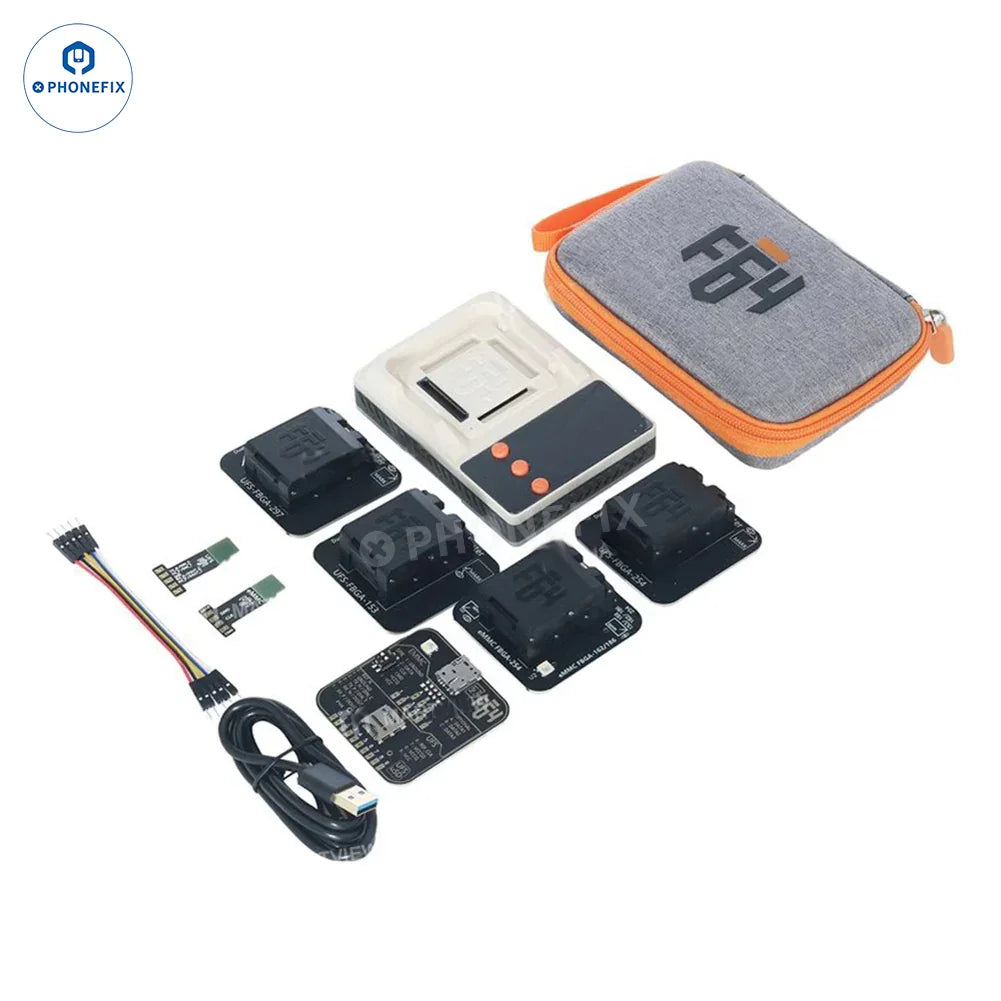

The mobile phone repair industry is transitioning from manual methods to high-precision technical standards. This shift replaces basic hand tools with specialized equipment, necessitating updated process workflows and fault diagnosis logic. Consequently, service standards now depend on the integration of professional hardware and systematic repair methodologies.

I. Digital Repair Overview
Traditional craftsmanship and tools are now insufficient as increasing smartphone hardware complexity raises repair difficulty.
1. Cell phone Hardware Complexity
Modern flagship phones generally use multi-layer stacked motherboards, 008004-grade micro-capacitors, and complex flexible printed circuits (FPC). Traditional visual inspection and basic digital multimeters are no longer sufficient.
2. Digital Diagnostic Necessity
Repair shops are fully integrating digital diagnostic systems, cloud-based schematic software, and automated repair tracking systems. These tools enable technicians to shift from "trial and error based on experience" to being "data-driven," significantly improving repair rates.
3. Core Repair Tools
To handle high-difficulty repairs, modern workstations are typically equipped with the following professional tools:
· Hot Air Gun
This tool is essential for disassembling chips, BGA re-balling, and soldering. It features closed-loop airflow control and a rapid cooling mode to ensure precise thermal management.
· DC Power Supply
Used for locking leakage and performing current curve analysis, this equipment supports short-circuit and overload protection to prevent further damage to the device.
· Trinocular Stereo Microscope
Critical for observing micro-cracks and performing trace jumping operations, it supports 6.5X-58X continuous zoom and provides dynamic image output for detailed visualization.
· BGA Soldering Station
Designed for soldering tiny components and jumper wires, it provides rapid heating and utilizes precision soldering tips for high-accuracy work.
· Infrared Thermal Camera
This device allows technicians to quickly locate motherboard hot spots through pixel-level thermal analysis, making it easier to identify failing components.

II. Fault Repair Procedures
1. Short Circuit Case Analysis
· Case Analysis: Phone fails to power on, indicating a high-current short circuit fault.
· Preparation: Anti-static workbench, adjustable DC power supply, infrared thermal camera, multi-functional probes.
· Diagnostic Process: Connect to the battery interface via the DC power supply. If there is a significant current jump (usually 200mA to over 2A) without pressing the power button, it is determined as a short circuit in the main power supply line. Subsequently, use the infrared thermal camera to scan the motherboard. By capturing chips or filter capacitors with instantaneous abnormal temperature rises, the physical breakdown point is precisely locked.
2. Repair Procedures
· Step 1: Positioning and Cleaning
Use infrared thermal imaging or rosin to locate the heat source. Under a trinocular stereo microscope, use a hot air gun combined with a glue removal knife to carefully remove the potting glue around the component without damaging surrounding tiny parts.
· Step 2: Disassembly and Pad Leveling
Select a precision hot air gun with a fine nozzle and apply localized heat to the damaged component. Once the solder melts, remove it steadily. Then use a soldering iron with desoldering wick to clean and level the pads, preventing secondary short circuits.
· Step 3: Post-Repair Testing and Validation
After the motherboard cools down, reconnect it to the regulated power supply to confirm that the current has returned to a standby 0mA. Finally, use a Digital multimeter to measure the resistance to ground of the power rail to ensure the fault is eliminated.

III. Repair Technology Innovations
Innovation is reflected not only in hardware but also in the deep integration of software and data.
1. AI-Assisted Diagnosis
Some advanced platforms are introducing AI algorithms to automatically provide repair suggestions by comparing the current waveforms of normal motherboards with faulty ones.
2. Automated Testing Platforms
After the repair is completed, technicians use professional automated test suites to conduct comprehensive functional audits, completely eliminating rework.
3. Cloud Management Systems
Modern shops are utilizing the cloud to store the repair history, spare part serial numbers, and operation records of every device in real-time. This provides customers with high transparency and builds a credit profile for the shop.
4. Advantages of Technical Innovation
· Efficiency Leap: Diagnostic time is shortened from hours to seconds by using infrared thermal imaging.
· Shortened Delivery Cycle: Precision tools reduce secondary damage; devices can usually achieve same-day drop-off and pick-up.
Conclusion
Precision in mobile phone repair has increased through advancements such as calibrated hot air stations and cloud data synchronization. While new technologies introduce technical complexity, the industry maintains reliability through systematic diagnosis and the use of high-quality Phone repair kits. Technicians who prioritize logical troubleshooting and advanced equipment will continue to meet the evolving requirements of the digital service sector.