Adhesives are frequently used during mobile phone screen repairs, but many beginners easily confuse screen sealing adhesive with OCA optical adhesive. In fact, the two have significant differences in their purposes, bonding locations, and applicable repair scenarios. Choosing the wrong product can affect the screen installation and may even cause poor screen adhesion, display abnormalities, and other problems. Therefore, before making a purchase, it is essential to confirm the phone model and specific repair requirements.

I. Understand the Differences First
A mobile phone screen consists of several layers, including the outer glass, touch layer, and display panel. Different bonding materials are required for different positions.
1. Screen Edge Sealing Adhesive
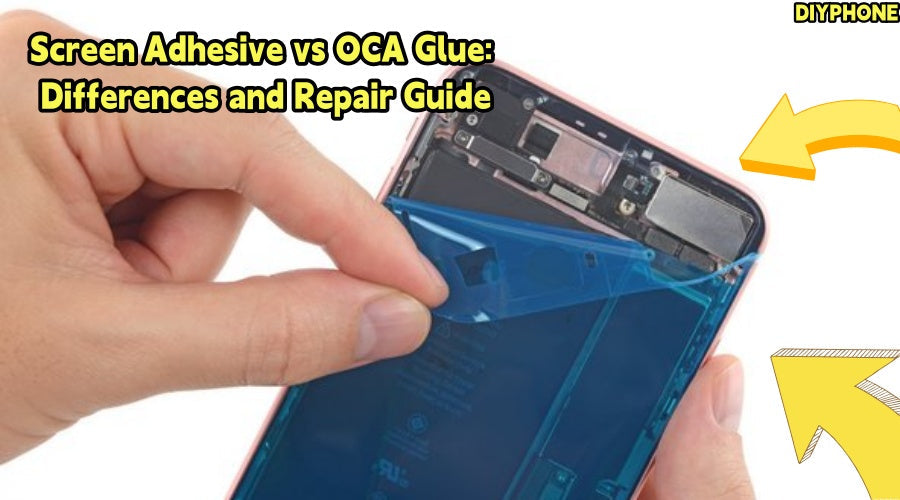
Screen sealing adhesive is mainly used to connect the phone screen assembly to the device's middle frame. It is commonly found in iPhones and other phones with embedded screen structures. Its main functions include:
· Securing the screen assembly and reducing looseness between the screen and the middle frame.
· Filling the gaps between the screen edges and the phone body.
· Working with the original device structure to help restore the device's original dustproof and waterproof sealing performance.
For example, after replacing an iPhone screen assembly, it is usually necessary to select screen sealing adhesive compatible with the corresponding model. Different models have different screen contours and middle frame structures, so a universal adhesive cannot be used as a substitute indiscriminately.
2. OCA Optical Adhesive
OCA stands for Optically Clear Adhesive. It is mainly used to bond transparent layers inside the screen. Common applications include:
· Optical bonding between the outer screen glass and the display module.
· Bonding between the screen touch layer and related transparent structures.
· Professional screen refurbishment after the outer glass of a mobile phone is cracked.
OCA Adhesive Tapes has high transparency and can meet the requirements of screens for light transmittance and display quality. For example, when the outer glass of a phone is cracked but the internal display and touch functions remain normal, professional repair technicians can assess whether an outer glass refurbishment solution is suitable.
3. The Two Types of Adhesive Cannot Be Used Interchangeably
Simply put, screen sealing adhesive is mainly responsible for securing and sealing the screen assembly to the phone's middle frame, while OCA adhesive is mainly responsible for bonding the transparent layers inside the screen. If you are only replacing the entire screen assembly, you should focus on selecting the edge sealing adhesive that matches the corresponding model. If the repair involves outer glass refurbishment, you need to confirm the specifications of the OCA optical adhesive and the screen structure.

II. Common Screen Problems and Repairs
Before purchasing adhesive, repair technicians should first identify the phone's problem and determine whether replacing the bonding material is actually necessary.
1. Cracked Screen or Lifted Edges
· Common symptoms: Cracks appear in the outer screen glass, gaps appear between the screen edges and the middle frame, or the screen becomes loose after installation.
· Problem analysis: If the iPhone Screen Assembly is already damaged, the corresponding screen assembly and edge sealing material should be replaced according to the phone model. If only the screen edges are lifting, it is also necessary to check whether the middle frame is deformed and whether any old adhesive remains. Simply adding more adhesive cannot solve the problem.
2. Cracked Outer Glass but Normal Display
· Common symptoms: The display works normally, with no black spots or liquid leakage. Touch functionality is basically normal, and only the outermost glass layer is damaged.
· Problem analysis: In this situation, it is possible to assess whether professional outer glass refurbishment is suitable. The repair involves optical bonding between the outer glass and the display module, requiring compatible OCA materials and professional laminating equipment. Ordinary screen sealing adhesive should not be used as a substitute.
3. Abnormalities After Screen Replacement
If display abnormalities, insensitive touch response, or poor screen adhesion occur after replacing the screen, do not immediately assume that the adhesive is the problem. Pay particular attention to whether the screen model is compatible, whether the flex cable connectors are functioning properly, whether the display module is damaged, and whether the middle frame is deformed. Only after identifying the cause should a repair plan be developed.
III. Precautions
1. Confirm the Exact Phone Model
When purchasing, do not look only at the brand or screen size. Different models within the same series may have different screen structures and sealing adhesive contours. It is recommended to record the phone's complete model number and verify it against the compatibility information provided by the supplier.

2. Clarify the Scope of the Repair
Before placing an order, first determine whether you need to replace the entire screen assembly or only refurbish the outer screen glass. For the former, the main consideration is the screen edge sealing material. For the latter, you need to confirm the OCA optical adhesive and related bonding materials.
3. Check the Product Description
When purchasing, it is recommended to confirm the following details with the supplier:
· Which specific phone models is the product compatible with?
· Which two surfaces is the adhesive designed to bond?
· Does the product include all the necessary bonding materials?
· Are clear specifications and usage instructions provided?
If the seller cannot explain the product's specific purpose, it is not recommended to purchase it blindly based only on the product title or appearance.
4. Perform Inspections Before and After Repair
Before repair, inspect the screen assembly, middle frame, flex cable connectors, and securing structures to ensure there is no obvious damage. After completing the repair, test the screen display, touch functionality, and bonding condition. For phones with waterproof designs, sealing tests should also be performed according to the relevant repair specifications. Replacing the sealing adhesive does not necessarily mean that the phone's original waterproof performance has been restored.
Although mobile phone screen sealing adhesive and OCA optical adhesive are both used for screen bonding, their actual purposes are completely different. Before purchasing, repair technicians should first confirm the phone model, the cause of the problem, and the scope of the repair before selecting the appropriate materials. Choosing the correct Mobile Phone Repair Tools and adhesives can help reduce repair mistakes and improve the reliability of screen repairs.