
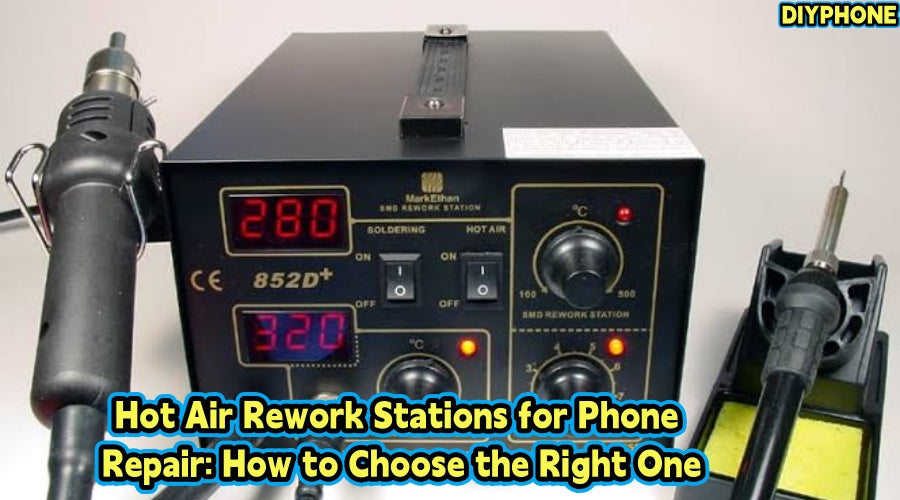
As cell phones, tablets, and other electronic devices become increasingly sophisticated, repair work demands more precise and reliable heating tools. With so many hot air rework stations available, choosing the right one can be challenging. This guide explores equipment types, key features, temperature control, airflow adjustment, safety, and maintenance to help you find the right station for your repair needs.

I. Choose Equipment Based on Your Needs
When purchasing a Hot Air Rework Station, the first consideration should be your daily repair tasks rather than simply comparing appearance, power, or price. Different repair jobs have different equipment requirements.
1. Dedicated Hot Air Rework Stations
If your work mainly involves removing SMD components, performing localized PCB rework, processing heat-shrink tubing, and softening adhesives, a dedicated hot air rework station will usually meet your needs. These devices focus on specific functions and feature a straightforward operating process. They are suitable for repair workbenches already equipped with a separate soldering iron, as well as small repair shops and electronics maintenance applications where controlling purchasing costs is important. When selecting a model, pay particular attention to the temperature adjustment range, airflow stability, nozzle compatibility, and handle comfort.
2. 2-in-1 Hot Air Rework Stations
2-in-1 devices typically integrate hot air and soldering iron functions into a single machine, meeting various needs such as component removal, soldering, and routine circuit board repairs. For mobile phone repair shops, electronics repair workshops, and training institutions, this configuration can reduce workbench space requirements and make it easier for technicians to switch between different repair procedures. However, before purchasing, you should still confirm that the hot air and soldering functions meet your actual needs and that the corresponding handles, heating elements, and soldering tips are easy to replace.
3. 3-in-1 Hot Air Rework Stations
Some 3-in-1 devices add a DC power supply output to their hot air and soldering functions, allowing them to power-test certain electronic circuits. If repair technicians frequently need to perform simple voltage tests, supply power to modules, or conduct basic circuit inspections, this integrated solution can reduce the number of separate devices required. Note that the DC power supply's output voltage, current range, and protection functions should meet actual requirements. The presence of three functions alone does not determine whether a device is suitable.
4. BGA Rework Systems
Repairing BGA chips and other high-density packaged components requires greater precision in heating uniformity, temperature profiles, and positioning accuracy. If your work involves removing and installing large chips, performing advanced motherboard repairs, or carrying out rework processes that require coordinated top and bottom heating, a professional BGA rework system is usually more suitable than a standard hot air rework station. Therefore, clarify the repair targets and technical difficulty before purchasing to avoid using basic equipment for tasks beyond its design capabilities.

II. Performance Is Key
After determining the equipment type, you should further compare its key performance characteristics. For precision electronics repair, temperature, airflow, and nozzle configuration are often more important than simply pursuing high power output.
1. Temperature Control
Different components and repair procedures require different heating conditions. If the temperature is too low, the solder may not melt sufficiently, or the adhesive may be difficult to soften. If the temperature is too high, it may damage displays, plastic structures, nearby components, or circuit boards.
It is advisable to prioritize equipment with a clear temperature display, convenient adjustment, and stable output. Digital temperature control helps reproduce settings, but the displayed value does not necessarily equal the actual temperature experienced by the component. Therefore, adjustments should still account for nozzle distance, heating time, and airflow.
2. Airflow Adjustment
Temperature and airflow should be adjusted together rather than simply setting both to their maximum levels. Excessive airflow may blow small components out of position and spread heat to surrounding areas. Insufficient airflow, on the other hand, may reduce heat transfer efficiency and extend repair time.
For small components on mobile phone motherboards, select an appropriate airflow level according to component size, surrounding layout, and soldering process. When working on screen edges or larger adhesive areas, the heating coverage and uniformity must also be considered.
3. Nozzle Configuration
Nozzles directly affect the coverage and concentration of hot air. Common options include small-diameter round nozzles, larger-diameter nozzles, and specially shaped nozzles.
Small-diameter nozzles: Suitable for electronic components in confined spaces that require concentrated heating.Medium-diameter nozzles: Suitable for general PCB rework and certain localized heating tasks.
Large-diameter or specially shaped nozzles: Suitable for heating wider areas, but the heat resistance of surrounding components must be considered.
When purchasing, confirm whether the equipment supports common nozzle sizes and whether replacement accessories can be purchased conveniently in the future. During use, ensure that the nozzle is securely installed and select an appropriate model for the specific procedure.
4. Ease of Use and Safety Features
Repair technicians repeatedly pick up and put down hot air handles throughout the day, so handle weight, cable flexibility, stand design, and the equipment's user interface all affect the operating experience. For repair shops that require extended operating hours, standby or automatic cooling functions activated when the handle is returned to its holder are also worth considering. These design features help reduce unnecessary continuous heating and lower the risk of operating errors.

III. Reduce Repair Risks Through Proper Operation
Choosing the right equipment is only the first step. Proper operating procedures are equally important during actual repairs, especially when working on phone screens, structures near batteries, and precision motherboards.
1. Adjust Heating Methods to the Repair Task
When removing a screen or back cover, the adhesive usually needs to be softened gradually. Operators should apply heat evenly while moving the hot air continuously, avoiding prolonged heating in one spot. When desoldering motherboard components, the heating procedure should be determined according to the solder type, component package, PCB structure, and surrounding components. A single fixed temperature should not be applied to every device.
2. Protect Batteries, Displays, and Nearby Components
The internal space of a mobile phone is limited, and components such as displays, plastic structures, camera modules, and batteries may be affected by heat. Before repairs, disconnect the power supply according to the device's repair procedures and disconnect the battery where appropriate. During heating, keep the hot air away from the battery itself, avoid prolonged exposure of heat-sensitive components to high temperatures, and use suitable heat-resistant protective materials to shield surrounding areas. If you notice an unusual odor, component deformation, battery swelling, or any other abnormal condition, stop immediately and reassess the safety conditions.
3. Implement ESD Protection and Ventilation Measures
Electronic components can be damaged by electrostatic discharge (ESD), so the repair workbench should be equipped with a suitable antistatic mat and grounding wrist strap, with grounding performed according to standard procedures. In addition, soldering and heating processes may generate smoke and other harmful emissions. The work area should be well ventilated, and professional repair environments are advised to be equipped with a Magnetic Smoke Extractor. A properly maintained working environment not only protects equipment but also helps safeguard technicians' health.

IV. Plan Purchases and Maintain Equipment Properly
For repair shops, electronics maintenance teams, and equipment distributors, purchasing a hot air rework station should involve more than considering the initial purchase cost. Long-term use and maintenance requirements should also be taken into account.
1. Confirm Accessories and After-Sales Support in Advance
Long-term use of a hot air rework station depends on the availability of necessary consumables and spare parts. Common accessories include nozzles of different sizes, hot air handles, heating elements, soldering iron handles, and replacement soldering tips. Before purchasing, check accessory availability, repair services, and warranty policies. For bulk purchases or distributor inventory, also confirm the voltage, plug specifications, and applicable compliance requirements in the target market to reduce inconvenience during subsequent use.
2. Inspect and Clean the Equipment Regularly
Residue on the nozzle may affect airflow, so the nozzle should be inspected and cleaned regularly according to the equipment manual. Before cleaning, switch off the equipment and ensure that the relevant components have cooled sufficiently. You should also inspect the handle, power cord, connection interfaces, and stand for wear or looseness. If any abnormalities are found, stop using the equipment and arrange for timely repairs rather than continuing to operate it with a fault.
3. Follow Proper Cooling and Shutdown Procedures
Some hot air rework stations feature automatic cooling functions. After completing a task, return the handle to its holder according to the manufacturer's specified procedure and allow the equipment to complete its cooling cycle. Do not disconnect the power supply without authorization while the heating element is still at a high temperature or ignore the equipment's cooling requirements. Proper shutdown procedures help reduce the risk of heat damage and extend the service life of the heating components.
4. Develop a Purchasing Plan Based on Actual Workload
If you handle large volumes of mobile phone repairs and PCB rework every day, prioritize equipment stability, operating efficiency, and spare parts availability. If you only perform basic repairs occasionally, a device with simple functions and easy operation may be sufficient. For training institutions or businesses that need to equip multiple workbenches, ease of use, maintenance costs, and the functional requirements of different workstations should also be evaluated comprehensively.
Conclusion
Choosing the right hot air rework station requires comprehensive consideration of repair tasks, temperature control, airflow adjustment, nozzle configuration, safety features, and after-sales support. Rather than blindly pursuing high power output or complex functions, it is better to select ,Mobile Phone Repair Tools with stable performance, convenient operation, and reliable accessory availability based on actual repair scenarios. This helps reduce unnecessary losses and supports long-term, reliable electronics repair work.


